
THE CLIENT
Harley-Davidson sold its first police motorcycle to the Detroit Police Department in 1908 — five years after the company was founded. That relationship has never really ended. By the 1920s, more than 3,000 police departments and government agencies were using Harley-Davidson motorcycles. Today, that number exceeds 3,400 departments in the United States alone, representing nearly 80% of all police motorcycles on American roads. For more than a century, the Harley-Davidson police motorcycle has been embedded in the infrastructure of American law enforcement in presidential motorcades, highway patrol units, state troopers, municipal forces, and federal agencies across the country and in dozens of countries internationally.
The police and fleet business is not incidental to Harley-Davidson. It is, and has been from the beginning, a structural pillar of the company. During the Great Depression, when civilian sales collapsed, Harley aggressively marketed itself as “The Police Motorcycle” and used law enforcement fleet contracts to survive. During World War II, when no civilian bikes were produced at all, military and government fleet production kept the Motor Company operational. The police relationship is how Harley-Davidson has weathered every existential threat in its history.
THE WORK
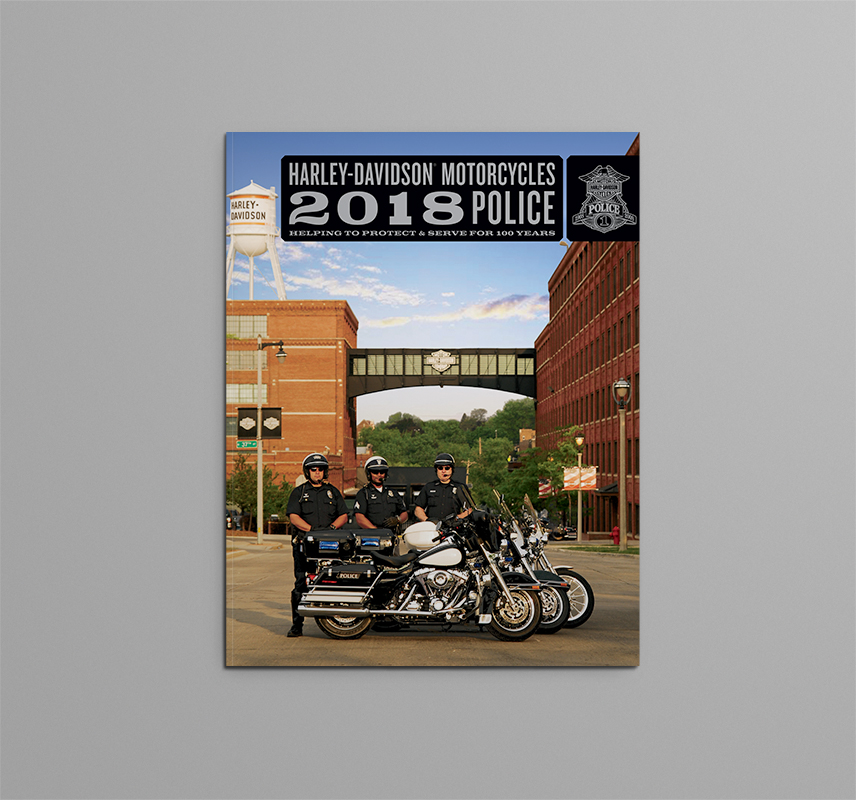
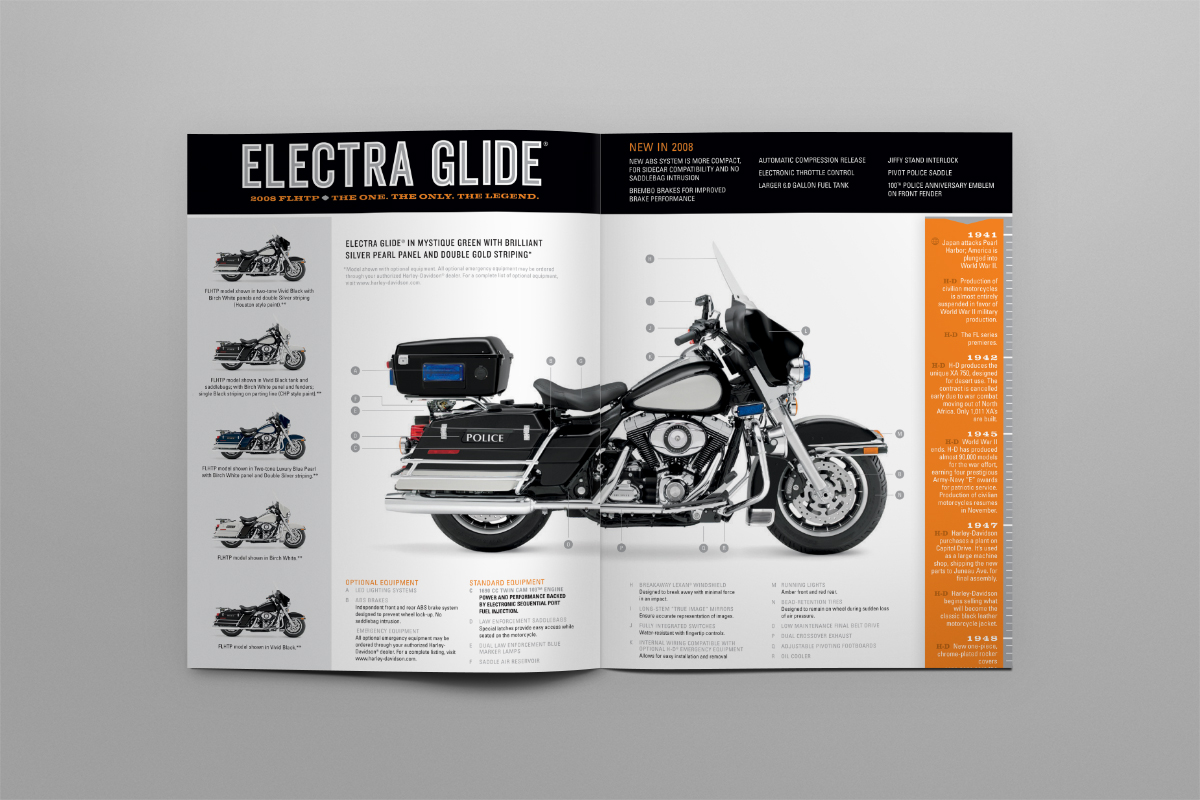
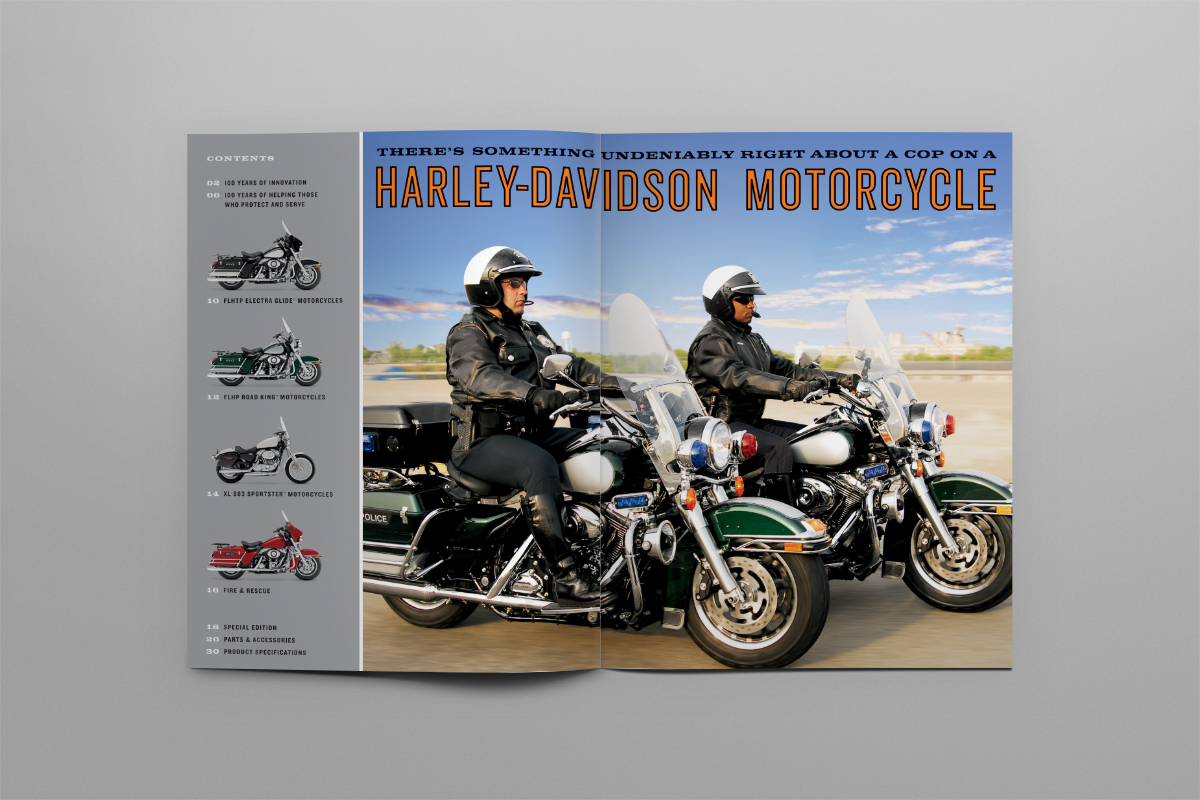
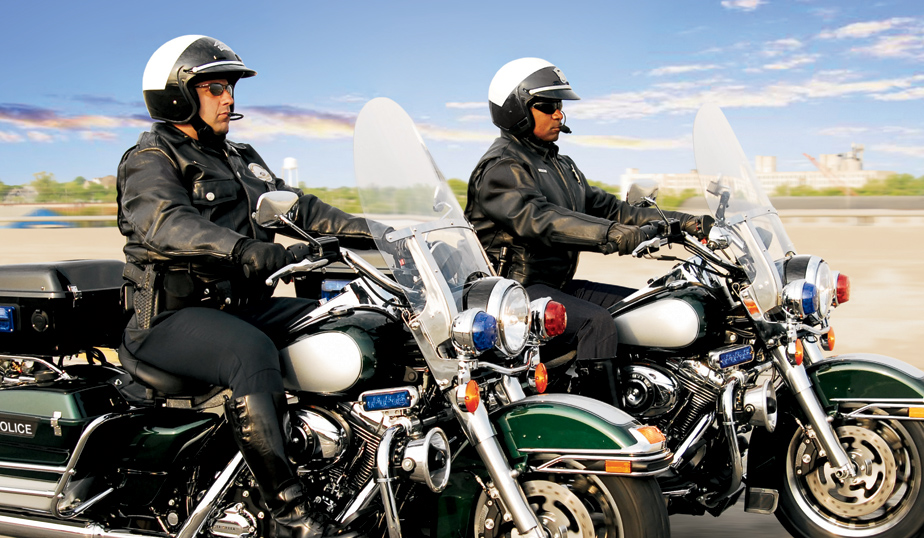
Travis Cain, BWM’s Creative Director, was responsible for the design and photography art direction of Harley-Davidson’s Police Motorcycle Catalog. This is B2B procurement design at its most consequential — a catalog whose audience is not a general consumer flipping through a magazine, but a police department procurement officer, a fleet manager, a motor unit supervisor, or a municipal government making a capital equipment decision that will govern their fleet for years.
The catalog is the primary sales tool in that process. It is what gets distributed at the 60-plus law enforcement events Harley-Davidson’s Police & Fleet Sales team attends annually. It is what sits on the desk when a department is evaluating whether to renew a fleet contract, expand a motor unit, or convert from a competing brand. It has to perform under scrutiny — from technically knowledgeable buyers who know exactly what they’re looking for and why. It has to make the bikes look like what they are: purpose-built professional equipment worthy of carrying an officer safely through tens of thousands of duty miles.
That requires a specific kind of design intelligence. The photography art direction determines whether a Harley-Davidson police motorcycle reads as the commanding, reliable presence it’s meant to be — or whether it looks like a consumer brochure. The layout has to communicate specification and prestige simultaneously. The design has to serve a brand whose visual identity is one of the most recognizable in the world while adapting that identity to a context of government procurement, law enforcement, and institutional trust that is entirely different from the civilian motorcycle market.
THE REACH
The Harley-Davidson Police Motorcycle Catalog reaches a concentrated but extremely high-stakes audience: every law enforcement agency in the United States evaluating, renewing, or expanding a Harley-Davidson fleet contract. Given that more than 3,400 departments use Harley-Davidson motorcycles and that Harley’s Police & Fleet Sales division directly engages those departments at events, in-person demonstrations, and through direct distribution, the catalog functions as the cornerstone document in a procurement process that generates significant ongoing revenue for the Motor Company.
It also reaches an international audience. Harley-Davidson police motorcycles have been purchased by law enforcement agencies in more than 45 countries. The catalog is the visual and technical foundation for those sales conversations, wherever they happen in the world.
No individual campaign metric exists for a government procurement catalog, as it might for a consumer ad. What does exist is the track record: a brand that has held a dominant market position in the American police motorcycle segment for over a century, whose police business has helped sustain the company through wars and recessions, and whose sales catalog is the document that makes that business case to every buyer, every year.
WHY THIS IS ON BWM’S PORTFOLIO
For the same reason the LeMond campaign is here: Travis did this work, and it reflects the caliber of client and brief he has operated at. A Harley-Davidson Police Motorcycle Catalog is not a small assignment. It requires understanding institutional audiences, government procurement culture, the visual language of authority and reliability, and the specific demands of a brand that is simultaneously American mythology and serious professional equipment.
That range, from consumer advertising to institutional B2B design, from athlete brands to law enforcement procurement, is exactly the point. It is what distinguishes a designer who has worked at the top of the industry from one who hasn’t. And it is what comes with every project BWM takes on.